
This blog is brought to you by the team at Blue Jeans Network. We write about video conferencing, work from home, telecommuting, mobility and startup culture.


It’s important to note the difference between multipoint and multiplatform. Multipoint is defined as a call with 3 or more participants from varying locations. Simply put, it’s the number of participants in a call. Multiplatform goes one level deeper and it speaks to the different types of video-enabled devices that are supported in a multipoint call.

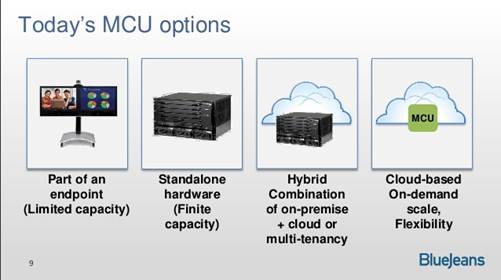
If you’re new to the video conferencing world and are looking for a solution for your growing organization, the task can be pretty daunting. One of the acronyms you’ll hear a lot is MCU – multipoint control unit. This is a system, often times a piece of hardware that bridges multiple video endpoints into a single call.

Multipoint video conferencing is defined as a video conference with more than two sites. For instance I could say I was on a multipoint video conferencing call with my teammates in Australia; I was using Skype, while Joe was on a Cisco endpoint, and Stacy called in from a Polycom endpoint.
As unified collaboration increasingly becomes imperative in enterprise strategy, Cisco and Microsoft, continue to battle for UC control of the desktop. The Cisco Jabber and Microsoft Lync clients offer features such as presence, voice, video, and web collaboration.
 Video conferencing quality is affected by a number of factors. One of the most important factors is the connection speed of your system. One best practice is to make sure your video system or desktop/laptop conferencing solution is hardwired to your network.